

Ecommerce SEO Guide: From Basics to Pro | Soocommerce
Optimizing your online store is essential to compete in the digital marketplace. Ecommerce SEO helps stores rank higher, attract organic traffic, and convert visitors into loyal customers.

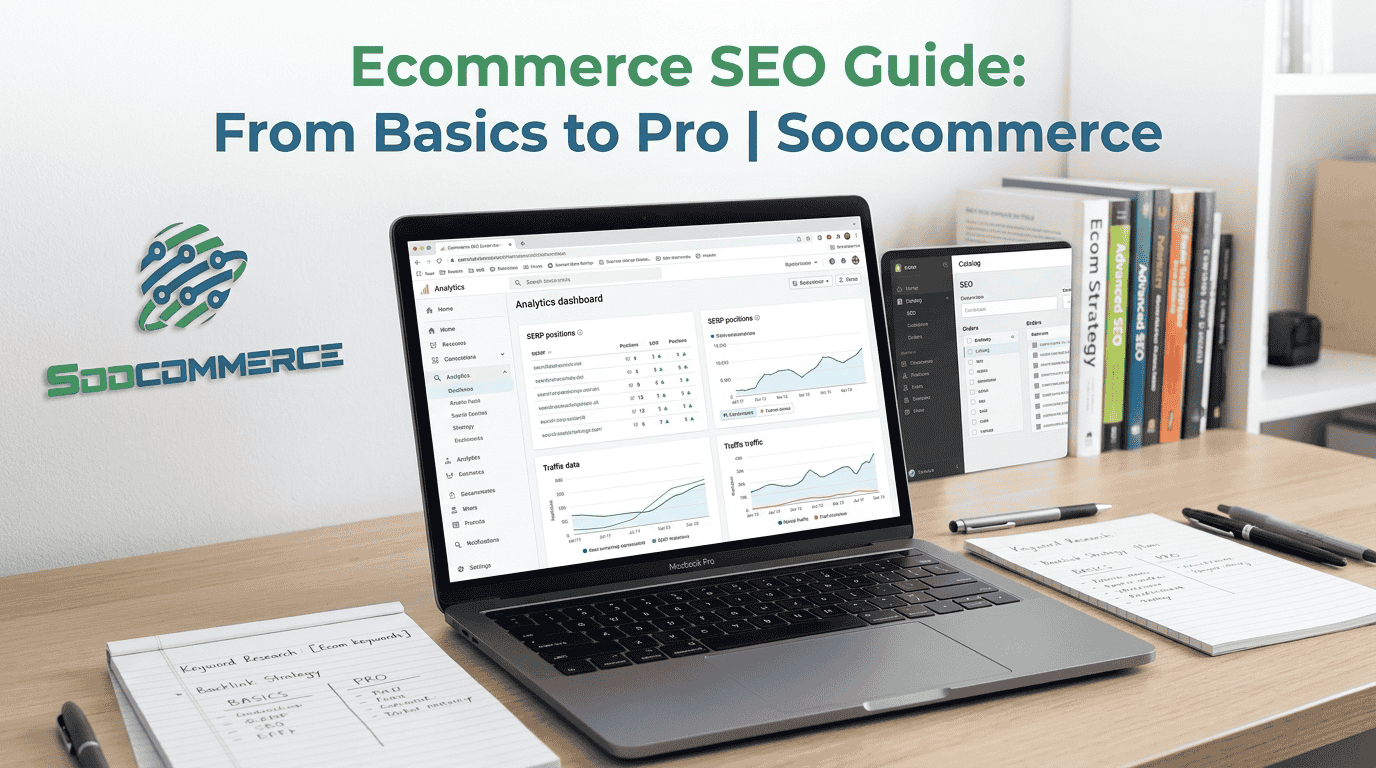
Introduction
Optimizing your online store is essential to compete in the digital marketplace. Ecommerce SEO helps stores rank higher, attract organic traffic, and convert visitors into loyal customers.
This guide takes you from the fundamentals of SEO to advanced strategies, providing actionable insights, examples, and checklists drawn from Soocommerce’s experience helping brands grow globally.
What is Ecommerce SEO?
Full Form Explained
Ecommerce SEO stands for Electronic Commerce Search Engine Optimization. It focuses on improving the visibility of online stores in search engines through keyword targeting, content optimization, technical SEO, and user experience improvements.
Why It Matters
Increases organic traffic to product and category pages
Reduces dependence on paid advertising
Improves user engagement and conversion rates
Builds long-term brand authority and online presence
Basic Ecommerce SEO Strategies
1. Keyword Research
Identify high-intent keywords for products and categories
Include long-tail keywords to capture niche searches
Use AI-powered tools for predictive insights (AI ecommerce SEO)
2. On-Page SEO
Optimize product titles, meta descriptions, and headers
Add descriptive ALT text to images
Implement internal linking to related products and categories
3. Technical SEO
Ensure fast page load times and mobile responsiveness
Fix broken links, duplicate content, and crawl errors
Use HTTPS, XML sitemaps, and structured data
Advanced Ecommerce SEO Strategies
1. AI-Assisted Optimization
Use AI tools for keyword clustering, content suggestions, and performance predictions
Automate meta tag generation and internal linking
2. Content Marketing
Create blogs, guides, and tutorials to support products
Leverage seasonal trends and FAQs for organic traffic
Incorporate internal and external links to strengthen authority
3. Predictive Analytics
Forecast keyword trends and potential traffic gains
Analyze competitors to identify gaps and opportunities
Adjust strategies based on data insights
Common Mistakes in Ecommerce SEO
Duplicate product descriptions across multiple pages
Ignoring mobile and site speed optimization
Overloading pages with keywords (keyword stuffing)
Not tracking performance with analytics
Neglecting technical SEO issues
Step-by-Step Ecommerce SEO Checklist
Conduct keyword research for products and categories
Optimize meta titles, descriptions, and headers
Add unique content and high-quality images
Implement structured data and schema markup
Improve site speed and mobile responsiveness
Build internal and external links
Use AI tools for automation and predictive insights
Monitor performance and adjust strategies regularly
Comparison: Basic vs Advanced Ecommerce SEO
| Feature | Basic SEO | Advanced SEO |
|---|---|---|
| Keyword Strategy | Manual, small-scale | AI-assisted, predictive |
| Content | Basic product descriptions | Guides, blogs, tutorials |
| Technical SEO | Fixes issues reactively | Continuous audits and automation |
| Analytics | Manual reporting | Predictive dashboards and insights |
| Scalability | Small stores | Large catalogs and enterprise stores |
Tip: Start with basics, then gradually implement advanced techniques for sustainable growth.
Platforms for Ecommerce SEO
Shopify: Beginner-friendly, apps for structured data and SEO optimization
WooCommerce: Flexible, full control over on-page and technical SEO
Magento: Robust for large catalogs, scalable, AI integration friendly
Selecting the best ecommerce platform for SEO ensures easier implementation of both basic and advanced strategies.
FAQ
1. What is ecommerce SEO?
Optimizing an online store to improve search visibility, attract organic traffic, and increase conversions.
2. How do I start with ecommerce SEO?
Begin with keyword research, on-page optimization, and technical fixes. Then progress to content, AI tools, and analytics.
3. Can AI improve ecommerce SEO?
Yes, AI helps with keyword research, content suggestions, internal linking, and predictive analytics for better results.
4. How long until I see results?
Typically 3–6 months for rankings and traffic improvements, depending on competition and strategy quality.
5. Which ecommerce platforms work best for SEO?
Shopify, WooCommerce, and Magento are highly compatible with both basic and advanced SEO strategies.
6. What common mistakes should I avoid?
Duplicate content, slow page speed, poor mobile UX, neglecting analytics, and over-optimizing with keywords.
Share this post:
Related Posts
Die Sichtbarkeit eines Onlineshops in Suchmaschinen ist entscheidend für Traffic und Umsatz. Dieses...
Suchmaschinenoptimierung ist für Onlineshops entscheidend, um Produkte sichtbar zu machen, Traffic z...
Eine effiziente SEO Online Shop Checkliste hilft Onlineshop-Betreibern, alle relevanten Optimierunge...