

Soocommerce Ecommerce SEO Strategy: Step-by-Step Roadmap
Discover the Soocommerce Ecommerce SEO Strategy with a step-by-step roadmap to increase rankings, drive organic traffic, and grow your online store revenue.

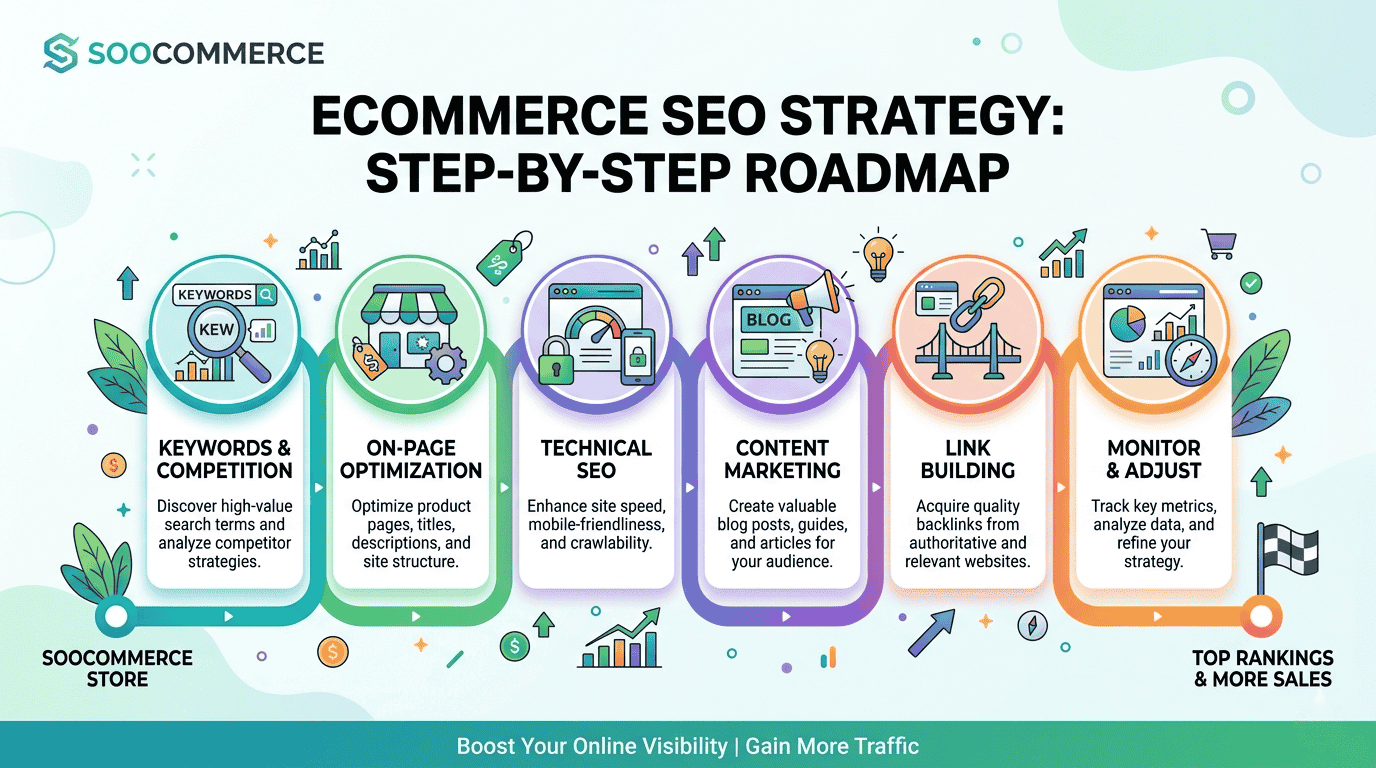
Soocommerce Ecommerce SEO Strategy: Step-by-Step Roadmap
Building a successful online store requires more than listing products and launching ads. To generate consistent traffic and long-term revenue, ecommerce businesses must appear prominently in search engine results. A well-planned ecommerce seo strategy helps online stores improve visibility, attract qualified visitors, and convert them into loyal customers.
The Soocommerce Ecommerce SEO Strategy provides a structured roadmap that store owners, marketers, and ecommerce teams can follow to optimize their websites effectively. Instead of relying on random SEO tactics, this approach focuses on a systematic process that combines keyword research, technical optimization, content creation, and authority building.
By following a clear SEO roadmap, ecommerce stores can compete in highly competitive markets and achieve sustainable growth.
Understanding the Importance of an Ecommerce SEO Strategy
Search engines have become one of the most powerful traffic sources for ecommerce websites. Customers frequently search for products, comparisons, and reviews before making purchasing decisions. Without a solid SEO strategy, online stores may struggle to reach these potential buyers.
An effective ecommerce seo strategy helps businesses:
Increase organic search visibility
Drive targeted traffic with purchase intent
Improve product and category page rankings
Reduce reliance on paid advertising
Build long-term brand authority
The Soocommerce roadmap focuses on aligning SEO strategies with business goals so that traffic growth translates into real revenue.
Step 1: Conduct Comprehensive Keyword Research
Keyword research is the foundation of any ecommerce SEO strategy. It helps identify what customers are searching for and how stores can position their products to meet that demand.
Identify Transactional Keywords
Transactional keywords signal strong buying intent. These searches typically include product names, comparisons, or purchase-related terms.
Examples include:
product-specific searches
best product recommendations
price comparison queries
Targeting these keywords allows ecommerce websites to attract visitors who are ready to purchase.
Use Keyword Clusters
Instead of targeting single keywords, successful SEO strategies focus on clusters of related terms. Keyword clusters help search engines understand topic relevance and improve overall rankings.
For example, a product page may target variations of a main keyword along with related phrases that customers commonly search.
Step 2: Optimize Ecommerce Website Structure
Website structure plays a crucial role in how search engines crawl and understand ecommerce websites. Poor navigation or disorganized product categories can negatively affect rankings.
Create a Clear Category Hierarchy
A logical structure allows both users and search engines to navigate the store easily. The ideal ecommerce structure follows a simple hierarchy:
Home → Category → Subcategory → Product
This structure helps distribute authority across pages and improves user experience.
Improve Internal Linking
Internal links guide search engines to important pages and strengthen relationships between related products and categories. Strategic internal linking can improve page authority and help product pages rank more effectively.
Step 3: Optimize Product and Category Pages
Product and category pages are the most valuable pages for ecommerce websites because they directly influence sales. Proper optimization ensures these pages rank well and convert visitors into customers.
Write Unique Product Descriptions
Duplicate manufacturer descriptions can harm SEO performance. Writing unique descriptions improves both search rankings and user engagement.
Effective product descriptions should:
Clearly explain product features and benefits
Include relevant keywords naturally
Address customer questions and concerns
Optimize Meta Titles and Descriptions
Meta titles and descriptions play an important role in both search rankings and click-through rates. Including the primary keyword in titles helps search engines understand page relevance while compelling descriptions encourage users to click.
Step 4: Implement Technical SEO Improvements
Technical SEO ensures that search engines can properly crawl, index, and rank ecommerce websites. Even the best content may struggle to perform if technical issues exist.
Improve Page Speed
Website speed is a critical ranking factor and significantly affects user experience. Faster websites lead to lower bounce rates and higher conversions.
Common improvements include:
compressing product images
reducing unnecessary scripts
using caching and content delivery networks
Ensure Mobile Optimization
Mobile devices generate a large portion of ecommerce traffic. A mobile-friendly website improves both search rankings and user experience.
Responsive design ensures that product pages display properly across all devices.
Step 5: Develop Content That Supports SEO
Content marketing is a powerful component of an effective ecommerce SEO strategy. Informational content helps attract users earlier in the buying journey.
Create Buying Guides and Tutorials
Content such as buying guides and tutorials helps customers make informed decisions. These articles often target informational keywords and bring additional organic traffic to ecommerce websites.
Examples include:
product comparison articles
beginner guides for choosing products
tutorials related to product usage
Support Product Pages with Internal Links
Blog articles should link to relevant product pages whenever possible. These links pass authority and help search engines understand the relationship between content and products.
Step 6: Build Authority Through Off-Page SEO
Off-page SEO focuses on building trust and authority for ecommerce websites. Search engines use backlinks and brand mentions as signals of credibility.
Earn High-Quality Backlinks
Backlinks from reputable websites improve domain authority and help pages rank higher in search results.
Effective backlink strategies include:
guest posting on industry blogs
collaborating with influencers
publishing valuable resources that attract links
Leverage Social Media
Although social signals are not direct ranking factors, social media helps promote content and attract natural backlinks. Increased exposure often leads to greater authority and improved SEO performance.
Step 7: Monitor SEO Performance and Adjust Strategy
SEO is not a one-time task. Continuous monitoring and optimization are necessary to maintain and improve rankings.
Important metrics to track include:
organic traffic growth
keyword rankings
click-through rates
conversion rates
Regular analysis helps businesses identify opportunities for improvement and adapt their ecommerce SEO strategy accordingly.
Ecommerce SEO Strategy Comparison
| Strategy Element | Basic SEO Approach | Soocommerce SEO Roadmap |
|---|---|---|
| Keyword Research | Limited keywords | Comprehensive keyword clusters |
| Website Structure | Basic navigation | Optimized category hierarchy |
| Content Strategy | Occasional blogging | Structured content marketing |
| Technical SEO | Minimal optimization | Full performance optimization |
| Authority Building | Few backlinks | Strategic backlink acquisition |
The Soocommerce roadmap provides a more structured and scalable approach to ecommerce SEO.
Common Ecommerce SEO Strategy Mistakes
Many ecommerce businesses struggle with SEO due to common strategic errors.
Typical mistakes include:
targeting overly competitive keywords
ignoring category page optimization
publishing duplicate product descriptions
neglecting technical SEO issues
failing to track SEO performance
Avoiding these mistakes can dramatically improve search visibility and traffic growth.
Practical Ecommerce SEO Strategy Checklist
To implement an effective ecommerce SEO strategy, follow this checklist:
Conduct comprehensive keyword research
Organize website structure with clear categories
Optimize product and category pages
Improve technical SEO and site speed
Create supporting content such as guides and tutorials
Build high-quality backlinks and brand authority
Track SEO performance and refine strategies regularly
Following this roadmap ensures a structured approach to ecommerce optimization.
Advanced Ecommerce SEO Strategy Techniques
As ecommerce businesses grow, advanced strategies become necessary to remain competitive.
Structured Data Implementation
Structured data allows search engines to display rich snippets such as product ratings, pricing, and availability in search results. These enhanced listings often increase click-through rates.
Voice Search Optimization
Voice search queries are becoming more common as users rely on digital assistants. Optimizing for conversational queries helps capture new search opportunities.
Scaling SEO for Large Ecommerce Stores
Large stores with thousands of products require scalable SEO systems. Automated internal linking, structured category management, and efficient content workflows help maintain strong SEO performance.
How the Soocommerce Ecommerce SEO Strategy Drives Growth
The Soocommerce approach focuses on aligning SEO with business growth goals. Instead of simply increasing traffic, the strategy emphasizes attracting visitors who are likely to convert.
Key advantages include:
Targeting high-intent search queries
Optimizing product pages for conversions
Building authority through content and backlinks
Creating sustainable organic traffic sources
By implementing these strategies consistently, ecommerce businesses can achieve long-term visibility and revenue growth.
FAQ
What is an ecommerce SEO strategy?
An ecommerce SEO strategy is a structured plan designed to improve the visibility of online stores in search engines and increase organic traffic.
Why is SEO important for ecommerce websites?
SEO helps ecommerce websites attract potential customers who are actively searching for products, leading to higher conversion rates.
How long does ecommerce SEO take to show results?
SEO typically requires several months to produce significant results, depending on competition and optimization efforts.
What pages should be optimized first?
Product pages and category pages should be prioritized because they directly influence sales and revenue.
Is content marketing necessary for ecommerce SEO?
Yes. Content such as buying guides and tutorials helps attract additional organic traffic and supports product page rankings.
Can small ecommerce stores compete with large brands?
Yes. By targeting niche keywords and implementing strong SEO strategies, smaller stores can successfully compete in search results.
What tools are useful for ecommerce SEO?
Keyword research tools, analytics platforms, and SEO auditing tools help track performance and identify optimization opportunities.