

Soocommerce Practical Ecommerce SEO Course for Store Owners
Discover the Soocommerce Practical Ecommerce SEO Course for store owners. Learn how to optimize product pages, increase organic traffic, and grow your online store with proven SEO strategies.

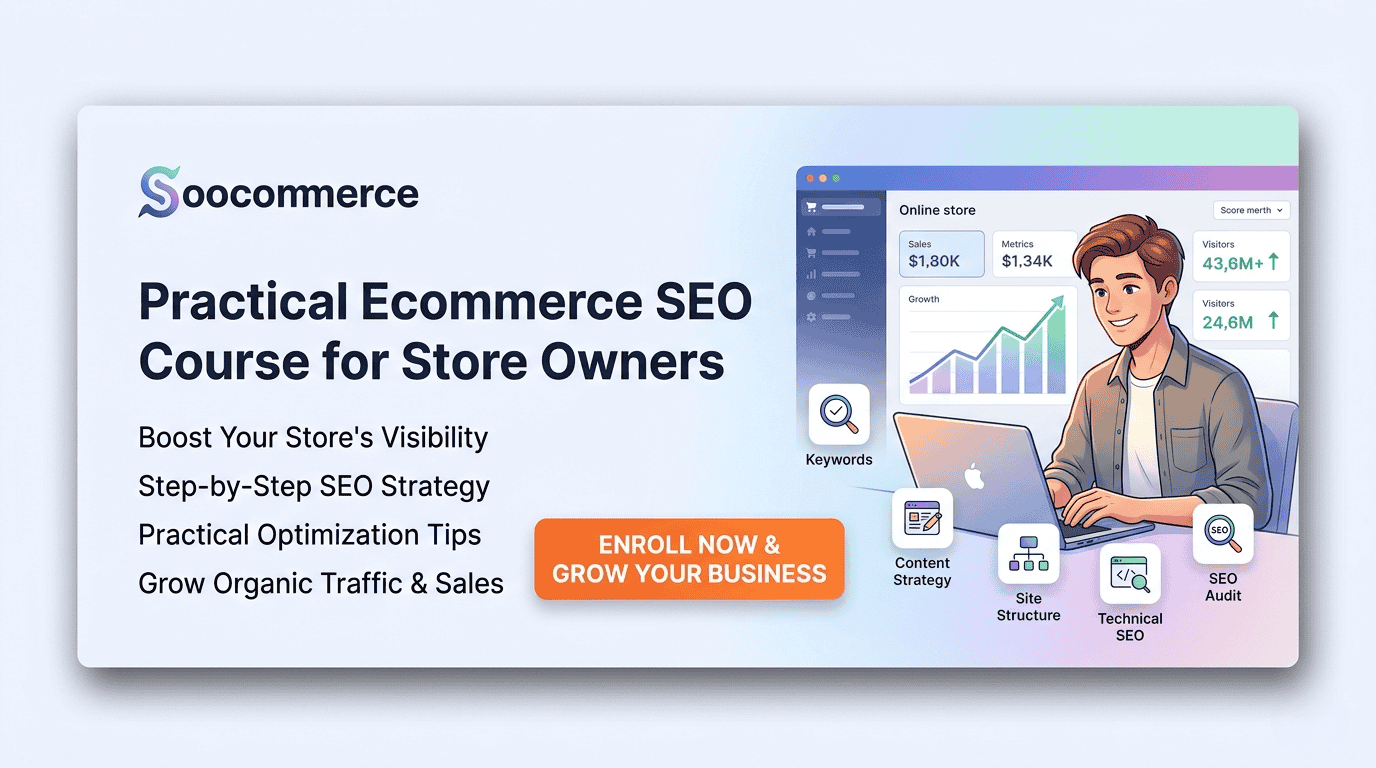
Soocommerce Practical Ecommerce SEO Course for Store Owners
Running an online store today requires more than simply listing products and waiting for customers to arrive. With thousands of ecommerce stores competing for visibility, ranking high in search engines has become essential. A structured ecommerce seo course can provide the knowledge and tools needed to improve search rankings, attract targeted visitors, and increase revenue.
The Soocommerce Practical Ecommerce SEO Course for Store Owners is designed specifically for entrepreneurs and ecommerce managers who want to learn practical, actionable SEO strategies. Instead of focusing only on theory, this course emphasizes real-world techniques that can be applied immediately to improve the performance of online stores.
By mastering ecommerce SEO, store owners can reduce dependence on paid ads, build sustainable organic traffic, and create long-term growth for their businesses.
Why Store Owners Need an Ecommerce SEO Course
Many store owners rely heavily on paid advertising platforms like Google Ads or social media campaigns to generate sales. While these channels can produce quick results, they also require constant spending. SEO, on the other hand, provides a long-term traffic source that continues to generate visitors without ongoing advertising costs.
An ecommerce seo course helps store owners understand how search engines rank product pages and how they can optimize their stores to appear higher in search results.
Benefits of Learning Ecommerce SEO
Increase organic traffic to product and category pages
Improve search engine rankings for important keywords
Reduce dependency on paid advertising campaigns
Attract highly targeted visitors with purchase intent
Build sustainable growth for ecommerce businesses
The Soocommerce course focuses on helping store owners gain the skills needed to manage their own SEO strategies effectively.
What Makes the Soocommerce Ecommerce SEO Course Practical
Many SEO courses focus on theory without showing how to apply the knowledge to real ecommerce stores. The Soocommerce course takes a practical approach that focuses on actionable steps and proven methods.
Students learn how to analyze their own ecommerce websites, identify SEO opportunities, and implement improvements that can quickly impact rankings and traffic.
Hands-On Learning Approach
The course provides step-by-step guidance for:
Conducting keyword research for ecommerce stores
Optimizing product pages and category structures
Improving technical SEO elements
Creating content that supports product sales
By applying these strategies during the course, students gain practical experience that helps them implement SEO effectively in their own stores.
Keyword Research for Ecommerce SEO
Keyword research is one of the most important skills taught in the ecommerce seo course. Without targeting the right search terms, even well-designed stores may struggle to attract visitors.
Understanding Search Intent
Ecommerce keyword research focuses heavily on buyer intent. This means identifying search queries that indicate a user is ready to purchase a product.
Examples of high-intent keywords include:
product-specific searches
comparison keywords
transactional phrases such as “buy” or “best price”
Targeting these keywords helps attract customers who are more likely to convert.
Tools for Keyword Research
Students learn how to use SEO tools to identify valuable keywords and analyze competition. These tools help store owners discover search trends, analyze competitors, and identify new opportunities for traffic growth.
Optimizing Product Pages for Search Engines
Product pages are the core of any ecommerce website. Optimizing these pages correctly is essential for ranking in search results and converting visitors into customers.
Writing Unique Product Descriptions
Many ecommerce stores copy manufacturer descriptions, which can lead to duplicate content issues. The course teaches how to write unique and engaging product descriptions that both search engines and customers appreciate.
Effective product descriptions should:
Include primary and related keywords naturally
Explain product benefits clearly
Provide useful details that help customers make decisions
Optimizing Titles and Meta Tags
Search engines rely heavily on titles and meta descriptions to understand page content. Students learn how to craft optimized titles that improve rankings and increase click-through rates.
Key elements include:
Including the primary keyword in titles
Writing compelling meta descriptions
Structuring headings properly for SEO
Technical SEO for Ecommerce Stores
Technical SEO ensures that search engines can properly crawl and index ecommerce websites. Even well-written content may fail to rank if technical issues prevent search engines from accessing the site effectively.
Improving Website Speed
Page speed is a crucial ranking factor and also affects user experience. Slow-loading websites often lead to higher bounce rates and lost sales.
Techniques taught in the course include:
Image compression
Reducing unnecessary scripts
Optimizing hosting and caching systems
Mobile Optimization
Mobile traffic now dominates ecommerce. Ensuring that online stores work smoothly on smartphones and tablets is essential for both rankings and conversions.
Students learn how responsive design and mobile usability impact search performance.
Content Marketing for Ecommerce Growth
Beyond product pages, ecommerce stores can attract additional traffic through informative content. Content marketing is an important part of modern SEO strategies.
Creating Informational Content
Blog articles and guides can target informational keywords that potential customers search before making purchases.
Examples include:
product buying guides
comparisons between similar products
tutorials related to products
These types of articles help bring new visitors into the sales funnel.
Supporting Product Pages with Content
Content also strengthens product page rankings by creating internal linking opportunities. When blog posts link to product pages, they pass authority and help search engines understand site structure.
On-Page and Off-Page SEO Strategies
Effective ecommerce SEO requires both on-page optimization and off-page authority building.
On-Page SEO Elements
On-page SEO refers to improvements made directly on the website, such as:
optimizing page titles and headings
improving product descriptions
enhancing internal linking structures
optimizing images and alt text
These factors help search engines understand the relevance of each page.
Off-Page SEO Techniques
Off-page SEO focuses on increasing website authority through external signals.
Important techniques include:
building high-quality backlinks
collaborating with industry blogs
gaining mentions from trusted websites
Strong off-page SEO improves credibility and search rankings.
Comparison: Learning SEO vs Hiring an Agency
Store owners often wonder whether they should learn SEO themselves or hire professionals.
| Factor | Learning Through Course | Hiring an Agency |
|---|---|---|
| Cost | Lower long-term investment | Higher ongoing cost |
| Knowledge | Builds internal expertise | Outsourced expertise |
| Time | Requires learning and practice | Faster implementation |
| Control | Full control over SEO strategy | Agency-managed strategy |
The Soocommerce ecommerce seo course helps store owners develop the skills needed to manage their own optimization strategies.
Common Ecommerce SEO Mistakes
During the course, students also learn to avoid common SEO mistakes that often prevent ecommerce stores from ranking well.
Typical mistakes include:
using duplicate product descriptions
neglecting category page optimization
overusing keywords in an unnatural way
ignoring technical SEO issues
poor internal linking structure
Avoiding these errors can significantly improve search performance.
Practical Ecommerce SEO Checklist
The course provides a practical checklist that store owners can follow when optimizing their websites.
Perform keyword research for product and category pages
Write unique product descriptions
Optimize titles, headings, and meta descriptions
Improve website speed and mobile performance
Implement structured data for products
Build internal links between relevant pages
Publish supporting content such as guides and comparisons
Following this checklist helps ensure that all key SEO factors are addressed.
Advanced Ecommerce SEO Strategies
After mastering the basics, the course introduces advanced techniques that help ecommerce stores compete in highly competitive markets.
Structured Data for Product Listings
Structured data allows search engines to display rich results such as ratings, prices, and availability directly in search listings. These features can improve visibility and click-through rates.
Voice Search Optimization
Voice search is growing rapidly with the popularity of digital assistants. Optimizing for conversational queries helps ecommerce websites capture additional search traffic.
Scaling SEO for Large Stores
Large ecommerce websites often contain thousands of product pages. Managing SEO at scale requires careful organization of categories, internal linking, and content structure.
How the Soocommerce Ecommerce SEO Course Helps Grow Your Store
The ultimate goal of learning SEO is to grow ecommerce businesses through sustainable traffic and higher conversions.
Key advantages of the course include:
Learning practical SEO strategies tailored for ecommerce
Improving product page visibility in search engines
Attracting targeted customers with purchase intent
Building long-term organic traffic sources
By applying the strategies taught in the course, store owners can significantly improve their search rankings and increase revenue.
FAQ
What is an ecommerce SEO course?
An ecommerce SEO course teaches strategies specifically designed to optimize online stores and improve product page rankings in search engines.
Who should take this course?
Store owners, ecommerce managers, digital marketers, and entrepreneurs who want to improve organic traffic and sales.
Do I need prior SEO knowledge?
No. Most ecommerce SEO courses start with beginner-friendly concepts and gradually introduce advanced techniques.
How long does it take to see SEO results?
SEO results typically appear within a few months depending on competition, website quality, and optimization efforts.
Can ecommerce SEO increase sales?
Yes. By ranking product pages for relevant search queries, ecommerce SEO attracts buyers who are actively searching for products.
Is ecommerce SEO different from regular SEO?
Yes. Ecommerce SEO focuses on optimizing product pages, category structures, and buyer-intent keywords.
Is SEO better than paid advertising?
Both have benefits. Paid ads provide quick traffic, while SEO builds sustainable long-term organic traffic.