
The Business Model That Lets You Sell Without Warehouses
Discover the business model that lets you sell without warehouses using Print on Demand, automated fulfillment systems, and global marketplace integrations. Learn how entrepreneurs build scalable online businesses with Etsy, eBay, Google Shopping, and Soocommerce without inventory storage or shipping management.

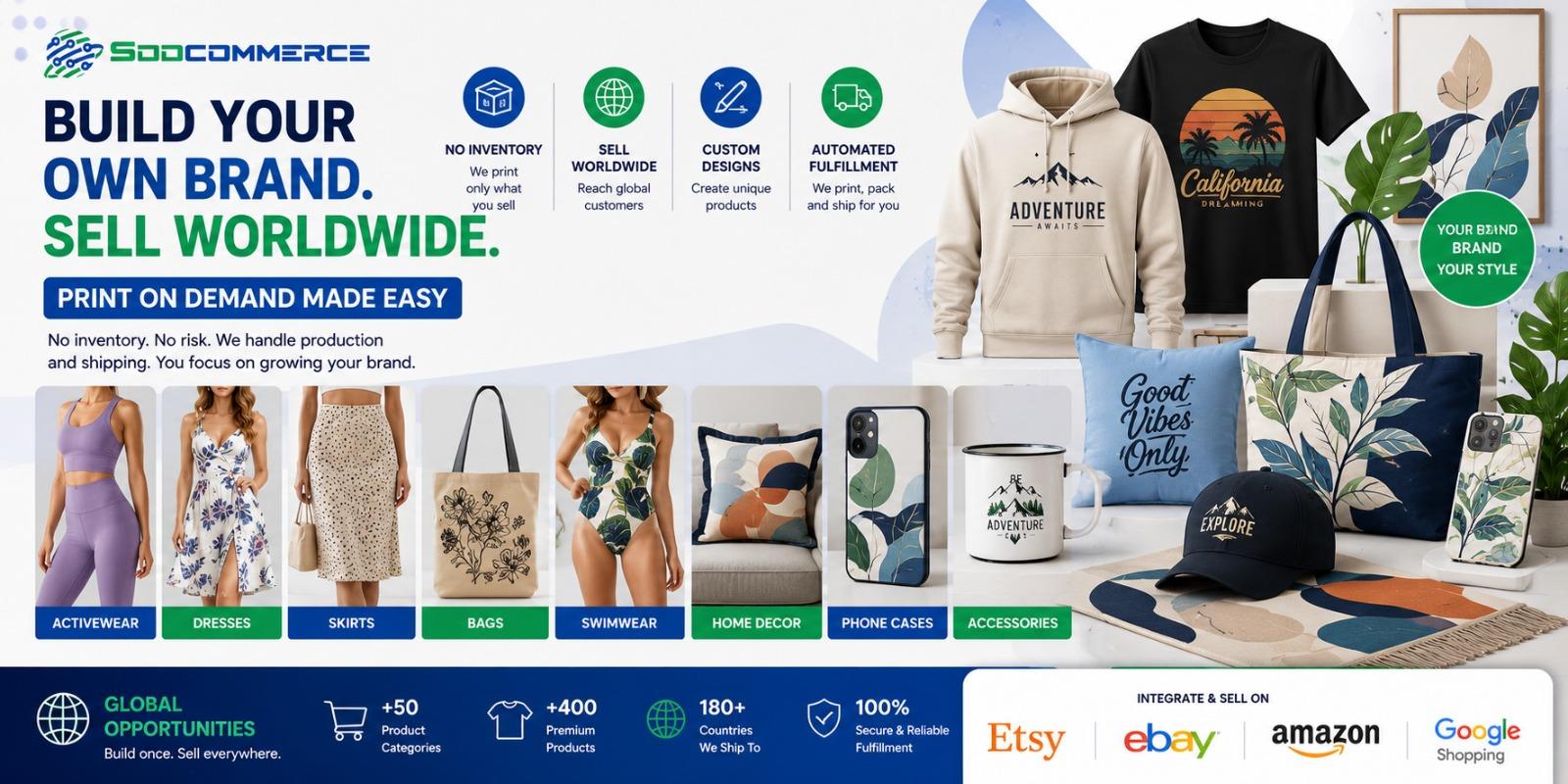
The Business Model That Lets You Sell Without Warehouses
For many years, starting an e-commerce business required warehouses, inventory investments, packaging operations, and complicated logistics systems. Entrepreneurs had to purchase products in bulk, manage storage spaces, and handle shipping operations manually. These challenges created high startup costs and significant financial risks for new businesses.
Today, however, digital commerce has evolved. The business model that lets you sell without warehouses is transforming how modern entrepreneurs build online brands. Through Print on Demand systems, automated fulfillment technologies, and marketplace integrations, businesses can now sell products globally without storing inventory or managing warehouse operations.
This shift is opening new opportunities for creators, startups, freelancers, and first-time entrepreneurs who want to enter global e-commerce with lower operational barriers. Companies like Soocommerce help simplify this process by providing professional e-commerce infrastructure, automated order systems, and integrated marketplace solutions designed specifically for inventory-free businesses.
As online shopping continues growing across international markets, warehouse-free e-commerce models are becoming one of the most efficient ways to build scalable online businesses.
Why Traditional Warehouse-Based E-Commerce Is Changing
Warehouses were once considered essential for e-commerce growth. However, modern business models are reducing the need for physical inventory storage.
Warehouses Increase Startup Costs
Traditional e-commerce businesses often require:
- inventory purchasing
- storage facilities
- packaging operations
- shipping coordination
- inventory management systems
These expenses create significant financial pressure, especially for small businesses.
For beginners, inventory risk alone can become a major obstacle.
Inventory Forecasting Is Difficult
Predicting customer demand is never easy.
Businesses often face:
- unsold products
- excess inventory
- storage costs
- outdated products
- cash flow problems
Warehouse-free systems reduce these risks dramatically because products are only created after orders are placed.
Modern Consumers Expect Faster and More Flexible Brands
Customer behavior is evolving rapidly.
Modern shoppers increasingly prefer:
- personalized products
- niche brands
- fast online experiences
- unique merchandise
Flexible e-commerce systems help businesses adapt to these changes more efficiently.
What Is the Business Model That Lets You Sell Without Warehouses?
The most popular warehouse-free business model today is Print on Demand, also known as POD.
How Print on Demand Works
Print on Demand is an automated fulfillment model where products are produced only after customers complete purchases.
The process is simple:
- A seller creates an online store.
- Custom products are uploaded.
- Customers place orders.
- Products are automatically printed.
- Packaging and shipping are handled directly.
This eliminates the need for physical inventory storage.
Why POD Is Growing So Quickly
The POD industry continues expanding because it combines:
- lower startup costs
- automation
- global scalability
- inventory-free operations
- flexible branding opportunities
This makes the model attractive for both beginners and experienced entrepreneurs.
Popular Products in POD Businesses
Many successful POD businesses focus on niche merchandise.
Popular categories include:
- apparel
- mugs
- posters
- tote bags
- wedding products
- pet accessories
- fitness apparel
- personalized gifts
Niche targeting often helps brands build stronger customer communities.
Why Entrepreneurs Prefer Warehouse-Free Business Models
More entrepreneurs are moving toward automated and inventory-free systems because they offer greater flexibility.
Lower Financial Risk
One of the biggest advantages is reduced financial exposure.
Businesses no longer need to:
- purchase inventory upfront
- rent warehouses
- manage unsold stock
This makes e-commerce far more accessible.
Easier Product Testing
Traditional inventory systems make testing expensive.
With POD, entrepreneurs can:
- launch products quickly
- test niche ideas
- experiment with designs
- adapt to trends rapidly
This flexibility is essential in fast-moving digital markets.
Global Selling Becomes Simpler
Warehouse-free systems allow businesses to sell internationally without building complicated logistics operations.
Modern entrepreneurs can reach:
- United States markets
- European customers
- international niche audiences
through automated fulfillment and marketplace integrations.
The Role of Automation in Modern E-Commerce
Automation is one of the biggest reasons why warehouse-free business models are growing rapidly.
Automated Fulfillment Systems
Modern systems automatically handle:
- order processing
- printing operations
- packaging workflows
- shipping coordination
This dramatically reduces operational complexity.
Automation Saves Time
Without warehouse management responsibilities, entrepreneurs can focus more on:
- branding
- marketing
- SEO optimization
- customer experience
- product development
This improves long-term scalability.
Smaller Teams Can Scale Globally
Automation allows smaller businesses to operate more efficiently.
Many entrepreneurs now manage international brands with minimal operational staff because fulfillment systems handle most backend processes automatically.
Marketplace Integrations and International Growth
Marketplace integrations are essential for expanding visibility and global reach.
Etsy and Creative Product Audiences
Etsy remains one of the strongest platforms for:
- personalized merchandise
- wedding products
- niche accessories
- creative designs
POD businesses often perform very well because Etsy customers actively search for unique products.
eBay Supports Broader Exposure
eBay helps businesses access:
- international buyers
- diverse product categories
- broader customer traffic
Multi-channel selling improves long-term business stability.
Google Shopping Increases Visibility
Google Shopping integration allows products to appear directly in search results.
Customers searching for:
- custom hoodies
- personalized mugs
- wedding sneakers
- fitness apparel
can discover products through shopping listings.
Professional systems like Soocommerce simplify these integrations efficiently.
Why Branding Matters More Than Warehouses
In modern e-commerce, branding is often more valuable than inventory ownership.
Customers Buy Brand Identity
Modern consumers prefer:
- authentic brands
- niche communities
- identity-driven products
- personalized shopping experiences
Strong branding creates emotional customer connections.
Professional Store Design Builds Trust
Customers quickly evaluate online stores.
Professional stores usually include:
- mobile-friendly layouts
- fast loading speed
- clear navigation
- high-quality visuals
- SEO-friendly structures
Soocommerce helps entrepreneurs build professional infrastructures optimized for global selling.
Social Media Supports Brand Growth
Social platforms play a major role in modern e-commerce growth.
Many successful POD businesses use:
- TikTok
to build audiences and showcase products visually.
Print on Demand vs Traditional Warehouse E-Commerce
Comparing these models helps explain why inventory-free systems continue growing.
| Feature | Print on Demand | Traditional E-Commerce |
|---|---|---|
| Warehouse Required | No | Yes |
| Startup Cost | Lower | Higher |
| Shipping Management | Automated | Manual |
| Product Flexibility | High | Medium |
| Financial Risk | Lower | Higher |
| Product Testing | Easier | More difficult |
Advantages of Warehouse-Free E-Commerce
Warehouse-free systems offer several major benefits:
- lower operational complexity
- easier international expansion
- reduced financial risk
- faster product launches
- flexible business scaling
These advantages attract many modern entrepreneurs.
Challenges Businesses Should Understand
Although POD simplifies operations, businesses still face challenges such as:
- marketplace competition
- branding consistency
- customer acquisition
- advertising strategy
Long-term success still requires strong execution.
Common Mistakes Entrepreneurs Make
Many new sellers underestimate the importance of strategy and branding.
Choosing Generic Niches
Generic stores often struggle because competition is high.
Successful businesses usually target:
- specific communities
- hobbies
- interests
- lifestyle audiences
Focused branding improves visibility and loyalty.
Ignoring SEO Optimization
SEO remains critical for long-term traffic growth.
Optimized product pages improve rankings on:
- Etsy
- eBay
- Google Shopping
Strong SEO structures generate more organic visibility.
Using Weak Product Visuals
Visual presentation directly impacts conversion rates.
Professional visuals help communicate:
- product quality
- brand identity
- design style
- product usage
Poor visuals reduce customer trust significantly.
Checklist for Building a Warehouse-Free Business
Before launching your store, review this checklist carefully.
Warehouse-Free E-Commerce Checklist
- Choose a focused niche
- Build strong branding
- Create professional visuals
- Prepare SEO-friendly product descriptions
- Integrate Etsy and eBay
- Enable Google Shopping
- Configure payment systems
- Optimize mobile responsiveness
- Test user experience
- Prepare a marketing strategy
This structure helps businesses scale more effectively.
How Soocommerce Simplifies Warehouse-Free E-Commerce
Building a global e-commerce business requires multiple systems working together efficiently.
Soocommerce helps entrepreneurs simplify this process through integrated infrastructure solutions.
Ready-to-Launch E-Commerce Infrastructure
Entrepreneurs can access:
- professional online store setup
- mobile-friendly design
- SEO optimization support
- marketplace integrations
- automated fulfillment systems
This dramatically reduces technical complexity.
Automated Printing and Shipping Systems
When customers place orders:
- products are automatically printed
- packaging is completed
- shipping is processed directly
This allows entrepreneurs to focus more on growth instead of logistics.
Global Marketplace Support
Integrated systems help businesses sell internationally through:
- Etsy
- eBay
- Google Shopping
- branded online stores
This creates strong opportunities for international expansion.
The Future of Warehouse-Free E-Commerce
The future of online commerce is moving toward:
- automation
- personalization
- niche branding
- flexible fulfillment systems
Personalized Products Will Continue Growing
Consumers increasingly prefer:
- custom merchandise
- creative brands
- identity-based shopping experiences
This trend strongly supports the POD industry.
Automation Will Improve Scalability
Technology continues improving:
- fulfillment workflows
- advertising optimization
- customer targeting
- marketplace synchronization
This helps smaller businesses compete more efficiently.
Community-Focused Brands Will Become Stronger
Brands that create emotional connections with customers are likely to outperform generic stores in the future.
This shift is already transforming global e-commerce strategies.
FAQ
What is the business model that lets you sell without warehouses?
Print on Demand is one of the most popular inventory-free business models where products are produced only after customers place orders.
Do I need inventory to start a POD business?
No. Products are automatically printed and shipped after orders are placed, eliminating the need for inventory storage.
Why do entrepreneurs prefer warehouse-free businesses?
Warehouse-free systems reduce startup costs, lower financial risk, and simplify operations through automation.
Which marketplaces work best for POD businesses?
Popular marketplaces include Etsy, eBay, and Google Shopping because they provide global customer access.
Is SEO important for warehouse-free e-commerce?
Yes. SEO improves product visibility across search engines and marketplaces, helping businesses attract organic traffic.
Does Soocommerce support inventory-free online businesses?
Yes. Soocommerce provides professional e-commerce infrastructure, marketplace integrations, SEO optimization, and automated fulfillment systems for warehouse-free businesses.
Share this post:
Artículos Relacionados

Ready to start your Print on Demand journey? Discover how Soocommerce helps entrepreneurs launch a p...

Discover why thousands of entrepreneurs are switching to Print on Demand eCommerce. Learn how this l...
Ready to launch your dream Custom Products Store? Discover how Soocommerce helps entrepreneurs build...