
Ecommerce SEO Full Form Explained | Soocommerce
Understanding the full form of ecommerce SEO is the first step to optimizing your online store effectively. Knowing what it encompasses helps brands implement strategies that drive traffic, improve rankings, and increase sales.


Introduction
Understanding the full form of ecommerce SEO is the first step to optimizing your online store effectively. Knowing what it encompasses helps brands implement strategies that drive traffic, improve rankings, and increase sales.
In this guide, we explain what ecommerce SEO means, how it works, and practical steps to apply it, drawing on Soocommerce’s expertise in global ecommerce growth.
What Does Ecommerce SEO Stand For?
Full form explained
Ecommerce SEO stands for Electronic Commerce Search Engine Optimization. It is the process of improving an online store’s visibility on search engines to attract organic traffic and convert visitors into customers.
Key Components
Keyword Research – Identifying high-intent search terms for products and categories
On-Page SEO – Optimizing product pages, meta titles, descriptions, and images
Technical SEO – Site speed, mobile responsiveness, crawlability, and structured data
Content Marketing – Blogs, guides, and tutorials supporting product visibility
Analytics & Reporting – Tracking performance, rankings, and conversions
Why Ecommerce SEO is Important
Drives Organic Traffic: Reduces dependency on paid ads
Boosts Conversions: Attracts high-intent buyers to product pages
Improves Brand Visibility: Builds credibility and authority
Supports Scalability: Enables growth in new markets or categories
Ecommerce SEO Examples in Action
1. Product Page Optimization
Unique titles and descriptions for each item
Optimized images with ALT text
Structured data for rich snippets
2. Category Page Optimization
Descriptive content and internal linking
Highlights top products and guides users through options
3. AI-Assisted SEO
Keyword clustering and automated meta descriptions
Predictive analytics for trending products and searches (AI ecommerce SEO)
Common Mistakes to Avoid
Using duplicate or thin content on product pages
Neglecting mobile optimization and site speed
Ignoring analytics and iterative improvements
Overlooking local SEO for geographic targeting
Focusing only on paid ads instead of organic SEO
Ecommerce SEO Checklist
Conduct comprehensive keyword research
Optimize product titles, descriptions, and images
Improve category page content and navigation
Implement technical SEO (speed, crawlability, mobile)
Create supporting content (blogs, guides, videos)
Build backlinks to strengthen authority
Track analytics and refine strategy
Use AI tools to scale SEO efforts efficiently
Comparison: Organic SEO vs Paid Advertising for Ecommerce
| Feature | Organic SEO | Paid Ads |
|---|---|---|
| Cost | Long-term, lower ongoing cost | Immediate, recurring cost |
| Audience | High-intent, organic traffic | Targeted, paid reach |
| Sustainability | Compounding results over time | Stops when budget ends |
| Scalability | Supports global growth | Budget-dependent |
Organic SEO Pros: Sustainable, builds credibility, scalable
Organic SEO Cons: Results take time
Paid Ads Pros: Immediate visibility and traffic
Paid Ads Cons: Expensive, short-term results
Platforms to Implement Ecommerce SEO
Shopify – Easy integration with SEO apps
WooCommerce – Flexible and customizable for SEO
Magento – Robust for large product catalogs and AI optimization
Selecting the best ecommerce platform for SEO ensures your store can implement strategies effectively.
FAQ
1. What is the full form of ecommerce SEO?
It stands for Electronic Commerce Search Engine Optimization, the process of optimizing online stores for search visibility and traffic.
2. Why is ecommerce SEO important?
It increases organic traffic, improves conversions, enhances brand visibility, and supports long-term growth.
3. What are the main components of ecommerce SEO?
Keyword research, on-page optimization, technical SEO, content marketing, and analytics.
4. Can AI help with ecommerce SEO?
Yes, AI can automate keyword research, meta descriptions, and content optimization, especially for large catalogs.
5. How long does it take to see results from ecommerce SEO?
Typically 3–6 months, depending on competition and implementation quality.
6. Which platforms are best for ecommerce SEO?
Shopify, WooCommerce, and Magento are ideal for applying comprehensive SEO strategies.
Share this post:
Artículos Relacionados
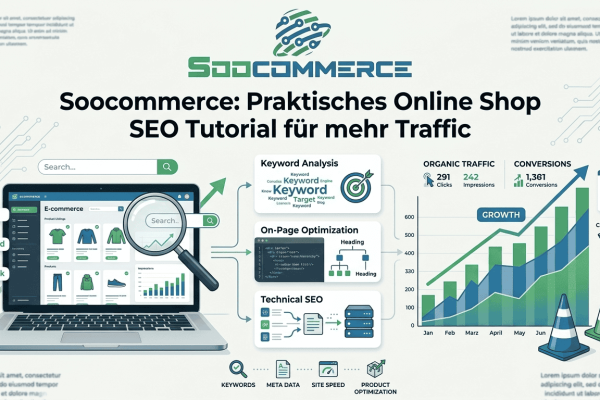
Die Sichtbarkeit eines Onlineshops in Suchmaschinen ist entscheidend für Traffic und Umsatz. Dieses...
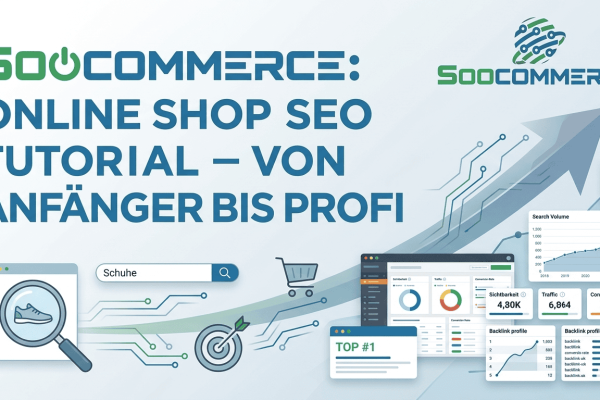
Suchmaschinenoptimierung ist für Onlineshops entscheidend, um Produkte sichtbar zu machen, Traffic z...
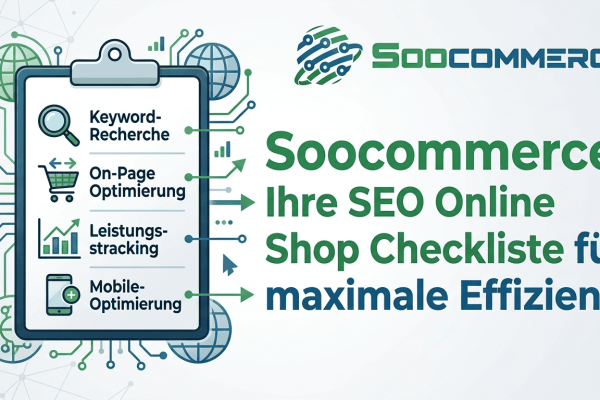
Eine effiziente SEO Online Shop Checkliste hilft Onlineshop-Betreibern, alle relevanten Optimierunge...