

Best Ecommerce Platform for SEO Compared | Soocommerce
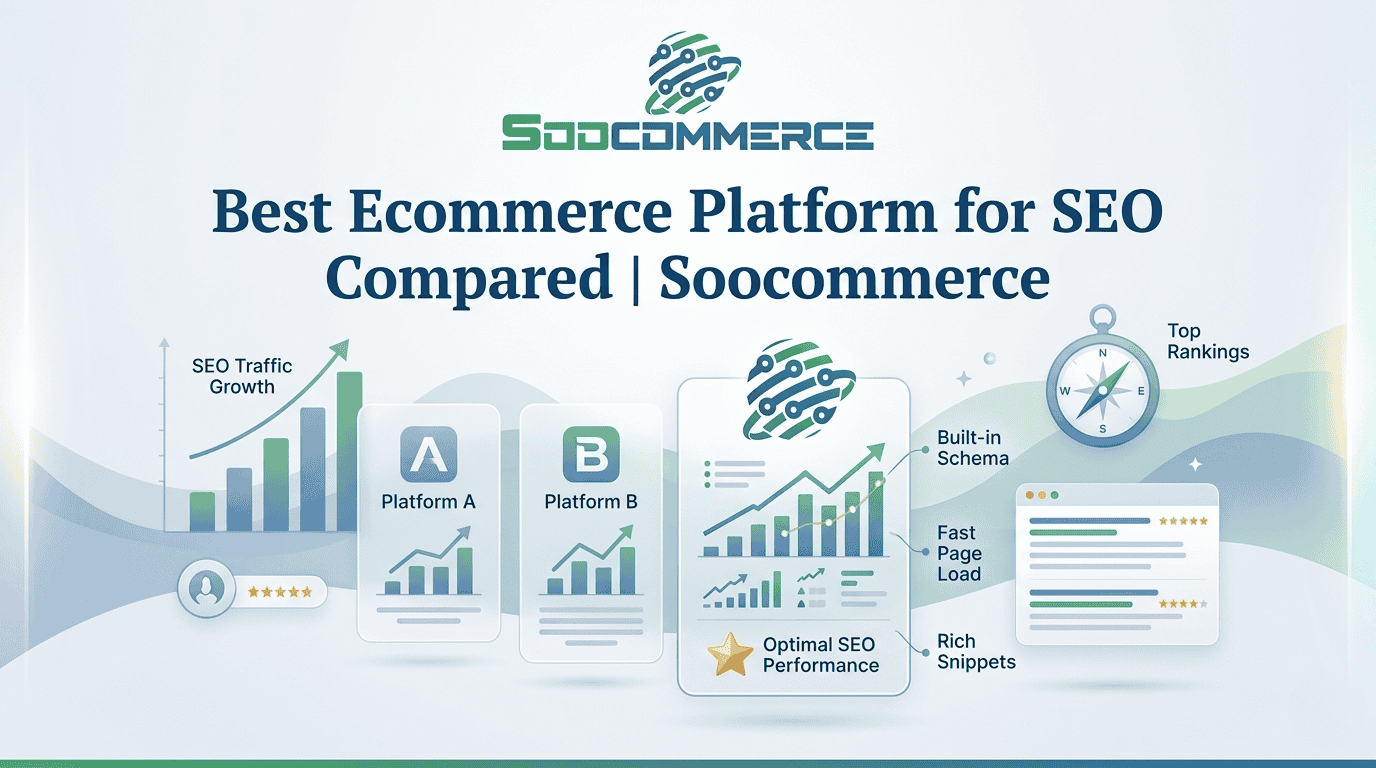
Choosing the best ecommerce platform for SEO is a critical decision for online store success. Your platform impacts search visibility, page speed, URL structure, and overall site performance—all crucial for ranking higher and attracting more customers.

Introduction
Choosing the best ecommerce platform for SEO is a critical decision for online store success. Your platform impacts search visibility, page speed, URL structure, and overall site performance—all crucial for ranking higher and attracting more customers.
This guide compares top platforms, highlights SEO features, and provides actionable recommendations to help brands make informed decisions. Soocommerce’s experience supporting global ecommerce growth informs every tip.
What is Ecommerce SEO?
Full form explained
Ecommerce SEO (Electronic Commerce Search Engine Optimization) is the process of optimizing an online store to rank higher in search results, attract organic traffic, and convert visitors into buyers.
Why your platform matters
- Platforms influence site speed and mobile responsiveness
- Built-in SEO tools can simplify optimization
- URL structure, schema support, and scalability affect search rankings
- Integration with analytics and AI tools enables continuous improvement
Top Ecommerce Platforms for SEO
1. Shopify
- Pros: Fast, mobile-friendly, built-in SEO features, apps for structured data, easy-to-use interface
- Cons: Limited customization for complex technical SEO, app costs can add up
2. WooCommerce (WordPress)
- Pros: Highly customizable, full control over SEO, extensive plugins for optimization, great for content marketing
- Cons: Requires technical knowledge for setup and maintenance, hosting dependent
3. Magento (Adobe Commerce)
- Pros: Robust for large catalogs, advanced SEO capabilities, supports AI tools, scalable for enterprise stores
- Cons: High learning curve, expensive hosting and development
4. BigCommerce
- Pros: Strong built-in SEO features, multi-channel selling, fast hosting
- Cons: Less flexibility than WooCommerce for custom SEO strategies
5. Wix Ecommerce
- Pros: Beginner-friendly, basic SEO tools included, affordable
- Cons: Limited scalability, less control over technical SEO
Comparison Table: SEO Features
| Feature | Shopify | WooCommerce | Magento | BigCommerce | Wix |
|---|---|---|---|---|---|
| Page Speed | High | Medium | Medium | High | Medium |
| Mobile Optimization | Excellent | Good | Good | Excellent | Good |
| URL Structure | Moderate | High | High | High | Low |
| Structured Data | Apps | Plugins | Built-in | Built-in | Limited |
| Scalability | Medium | Medium-High | High | High | Low |
| AI SEO Tools | Available via apps | Plugins & APIs | Built-in | Limited | Limited |
Key SEO Considerations by Platform
- URL Structure & Canonical Tags – Prevent duplicate content issues
- Site Speed & Performance – Fast loading improves rankings and UX
- Mobile Responsiveness – Mobile-first indexing is critical for SEO
- Structured Data Support – Product schema enhances SERP visibility
- Integration with Analytics & AI Tools – Enables predictive SEO and performance monitoring
Common Mistakes to Avoid
- Choosing a platform solely based on cost
- Ignoring mobile optimization and page speed
- Overlooking structured data and schema support
- Neglecting the ability to scale with your business
- Assuming built-in tools are enough without custom optimization
Recommendations for Different Business Needs
- Small/Startup Ecommerce: Shopify or Wix – simple setup, affordable, easy SEO tools
- Content-Driven Stores: WooCommerce – full SEO control, strong content integration
- Enterprise & Large Catalogs: Magento or BigCommerce – scalable, advanced SEO features
- Budget-Friendly Options: Wix or Shopify basic plans
FAQ
1. Which ecommerce platform is best for SEO?
It depends on your store size and goals. Shopify is beginner-friendly, WooCommerce offers full control, and Magento is ideal for large, enterprise catalogs.
2. Can Wix or BigCommerce rank well in search engines?
Yes, with proper optimization. However, technical flexibility and structured data support may be limited compared to WooCommerce or Magento.
3. How important is mobile optimization for ecommerce SEO?
Critical. Mobile-first indexing means Google prioritizes mobile-friendly websites in rankings.
4. Does the platform affect page speed?
Yes. Shopify and BigCommerce are hosted platforms with optimized speed, while WooCommerce depends on hosting and site setup.
5. Can AI tools integrate with ecommerce platforms?
Yes. Most platforms support AI-assisted SEO tools for keyword research, predictive analytics, and optimization.
6. Should I choose based solely on cost?
No. Consider scalability, SEO capabilities, technical flexibility, and long-term growth potential.
Share this post:
Related Posts
Die Sichtbarkeit eines Onlineshops in Suchmaschinen ist entscheidend für Traffic und Umsatz. Dieses...
Suchmaschinenoptimierung ist für Onlineshops entscheidend, um Produkte sichtbar zu machen, Traffic z...
Eine effiziente SEO Online Shop Checkliste hilft Onlineshop-Betreibern, alle relevanten Optimierunge...